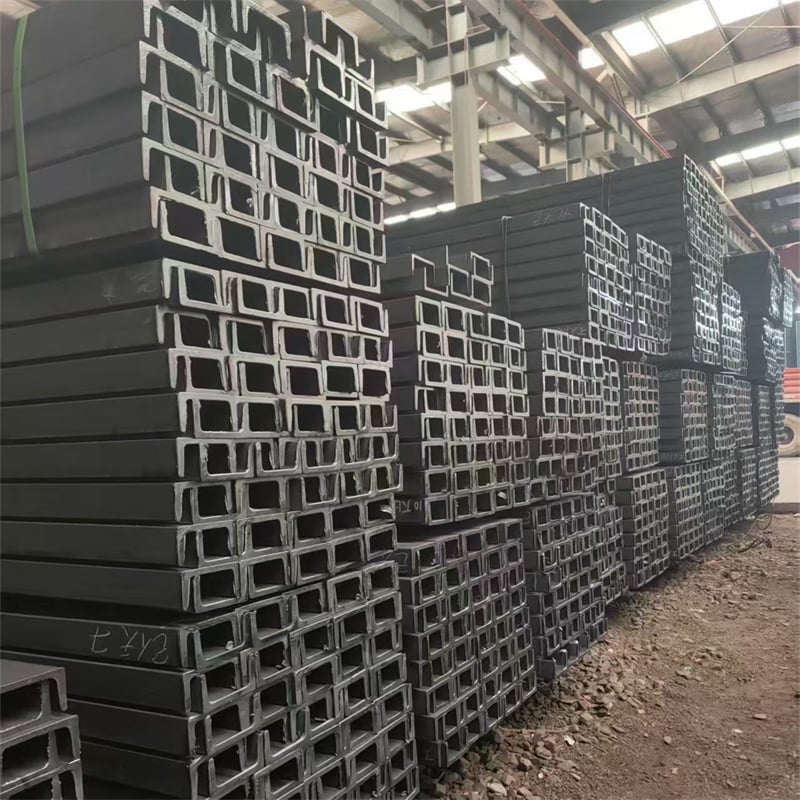
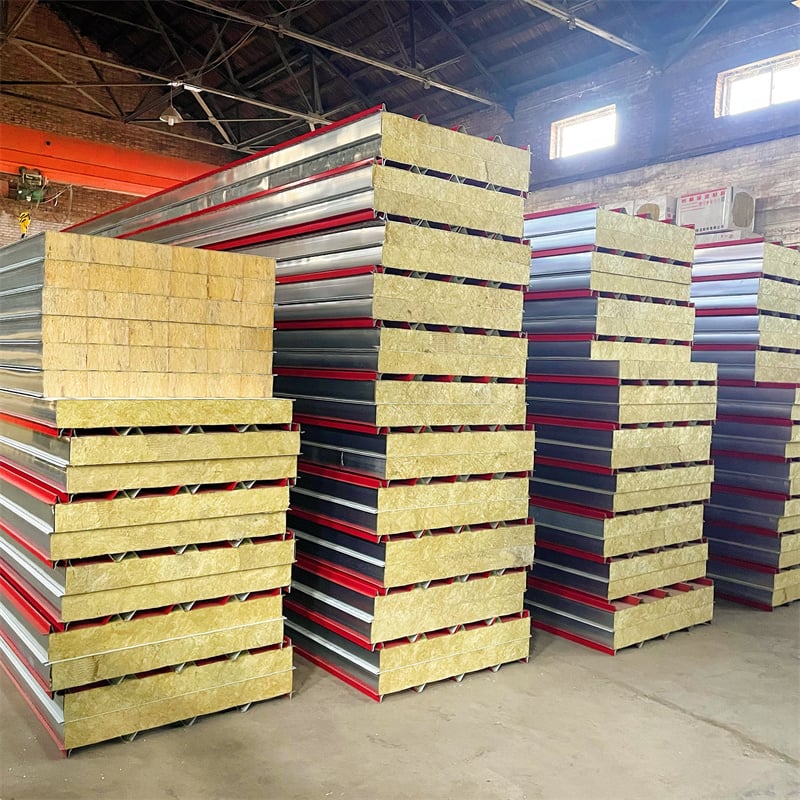
special-connecting-parts-q355b-carbon-steel-for-steel-structures-in-factory, special-connecting-parts-q355b-carbon-steel-for-steel-structures-in-factory, /accessories
EN
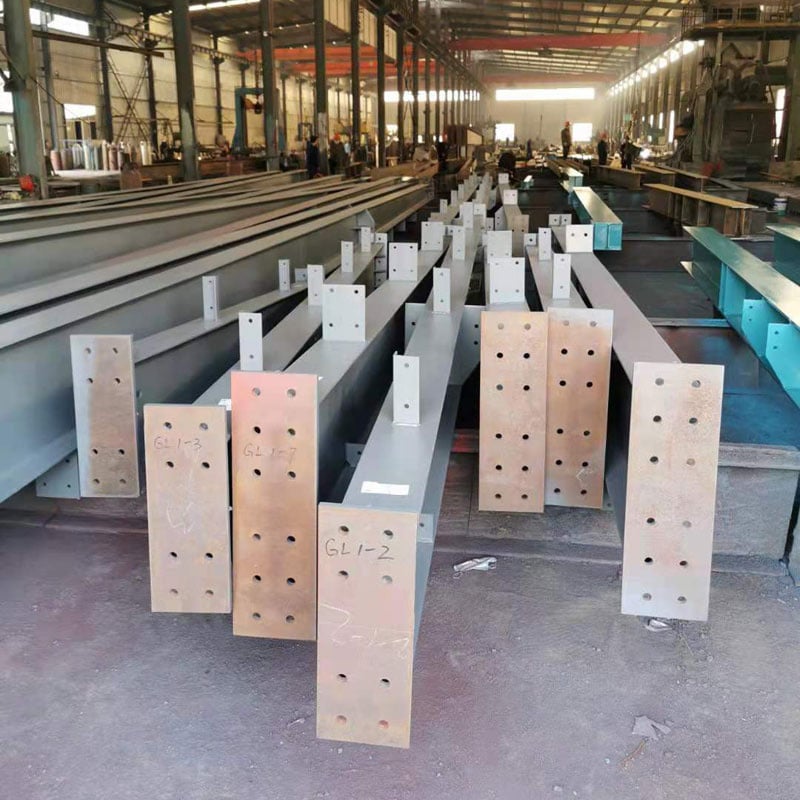
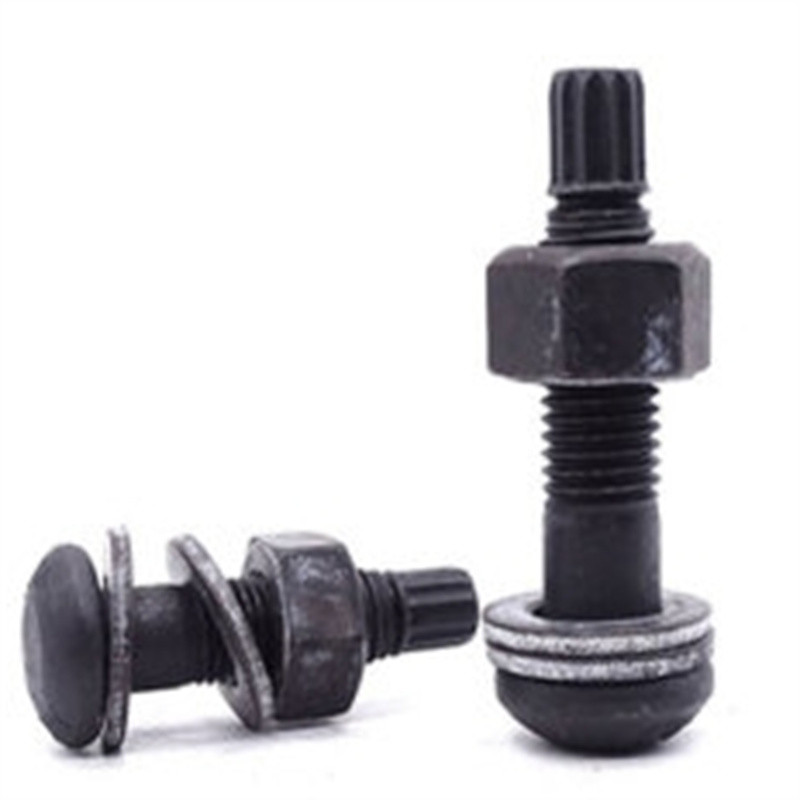
• Certification: 10.9-grade high-strength bolts comply with steel structure acceptance codes.
• Effect: Restrains purlin and beam deformation for a more stable overall structure.
• Scenario: Foundations, beam-column nodes, purlin bracing and wind-resistant systems.
Xingyuanxing presents a comprehensive introduction to special connecting parts for steel structures in factory building enclosures, focusing on their features, applications, innovations, and technical advantages. As manufacturers and designers pursue faster assembly, stronger joints, and improved weatherproofing, the role of steel structure connectors in factory building enclosure fittings becomes central.
Product Overview
Special connecting parts for steel structures in factory building enclosures are engineered elements designed to link beams, columns, panels, and secondary members with exacting tolerances. Xingyuanxing’s family of steel structure connectors serves as the backbone of robust factory building enclosure fittings, ensuring that every structural joint component meets load-bearing, alignment, and sealing requirements.
Core Features
High-Strength Materials: Xingyuanxing uses high-grade steels and treated alloys in its steel structure connectors to maximize fatigue resistance and long-term integrity. The factory building enclosure fittings incorporate corrosion-resistant coatings and galvanization to prolong service life in harsh environments
Precision Fabrication: Each structural joint component is manufactured to tight tolerances, enabling predictable assembly and reducing onsite adjustments. The enclosure connection hardware is pre-punched, pre-drilled, or machined to align with modular components, speeding installation and minimizing errors
Applications
Factory Building Enclosures: Xingyuanxing’s product line primarily targets factory building enclosure fittings, providing the enclosure connection hardware needed to attach cladding, roofing, panels, and service penetrations onto main steel frames. The steel structure connectors secure large footprint roofs and high-side walls while maintaining airtight and watertight performance
Innovations and Design Advances
Integrated Weatherproofing: Xingyuanxing has developed steel structure connectors that incorporate Gasketing channels and drip edges directly into the factory building enclosure fittings. This reduces secondary sealing work and improves long-term enclosure performance
Why Choose Xingyuanxing
Proven Expertise: With years of experience in developing special connecting parts for steel structures in factory building enclosures, Xingyuanxing understands industry pain points and tailors steel structure connectors to solve them
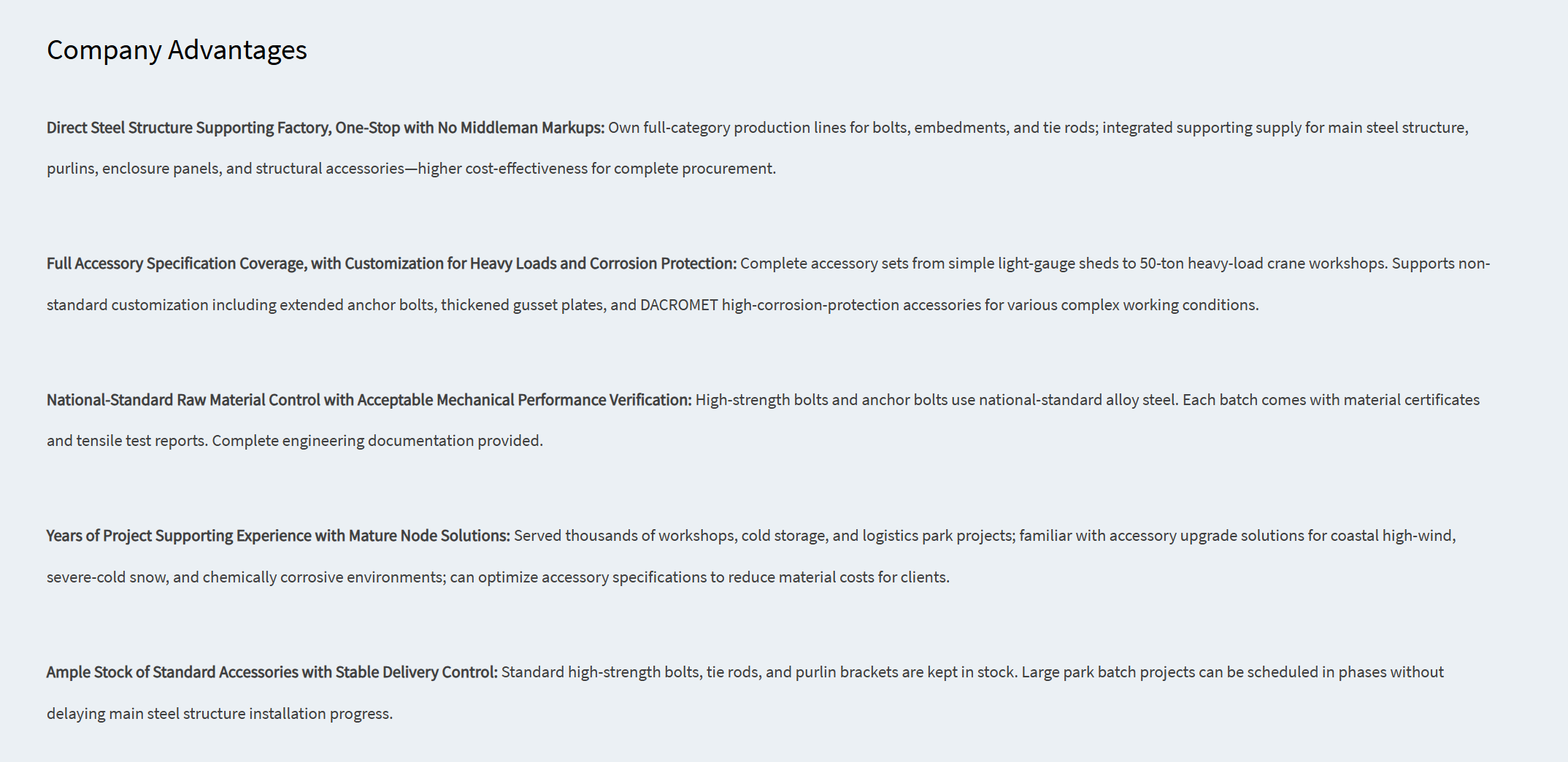
Complete Product Range for One-Stop Supply of Steel Structure Auxiliary Materials: Covers all accessories for foundation embedment, beam-column connections, roof/wall secondary structures, and structural reinforcement. No need to source bolts, tie rods, and embedments from multiple suppliers, reducing coordination costs and procurement cycles, facilitating unified project material preparation.
Clear Strength Grading with Precise Matching to Load-Bearing Locations: Key load-bearing beam-column nodes use 10.9-grade high-strength bolts; secondary structures and enclosures use galvanized ordinary bolts; foundations use thickened anchor bolts. Clear load grading ensures structural safety and complies with steel structure construction acceptance codes.
Multiple Anti-Corrosion Processes for Various Working Conditions: Blackening + galvanizing for ordinary plant areas; hot-dip galvanizing and DACROMET coating for coastal and chemically corrosive environments. Uniform zinc coating with strong adhesion resists corrosion during long-term outdoor use, with service life synchronized with the main steel structure.
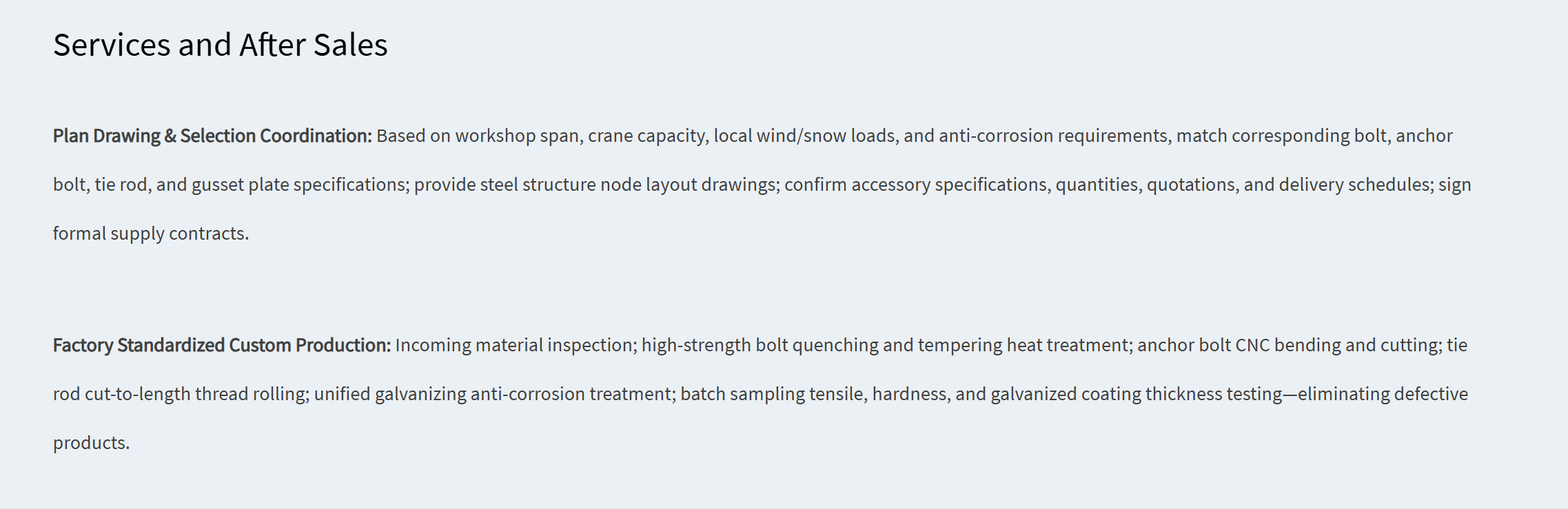
Factory-Standardized Prefabrication with High Dimensional Accuracy and Construction Efficiency: Anchor bolts, gusset plates, and tie rods are all CNC-blanked and cut-to-length with unified thread standards. No on-site secondary cutting or threading is required. Bolts are directly assembled with no on-site welding, significantly shortening steel structure installation periods.
Stable Mechanical Performance: Tie rods, knee braces, and column bracing accessories work together to restrain lateral deformation of purlins and steel beams, providing greater load-bearing capacity.
|
Parameter Item |
Standard Configuration Parameters |
|
Base Material |
Q355B carbon steel |
| Embedded Steel Plate Specifications | Conventional thickness: 6mm/8mm/10mm/12mm/14mm; length and width dimensions can be customized. Square, rectangular and special-shaped plates are available. |
|
High-strength Bolt Grade |
Grade 8.8 & 10.9 torsion shear / heavy hex high-strength bolts; sizes M16/M20/M22/M24/M27/M30 |
|
Standard Galvanized Bolt Sizes |
M12/M14, complete with flat washers and spring washers |
|
Anchor Bolt Sizes |
M16~M64, matched with anchor plates, nuts and base plates; lengths customizable on demand |
|
Tie Rod / Strut Material |
Φ10/Φ12/Φ14/Φ16 round steel, integrally hot-dip galvanized |
|
Purlin Bracket / Connection Plate Thickness |
Optional thickened steel plates: 6mm, 8mm, 10mm, 12mm, 14mm |
|
Applicable Building Loads |
Standard factories, heavy-load workshops with 5t–50t overhead cranes, cold storage, multi-story frames, coastal buildings with high wind pressure |
|
Matching Main Components |
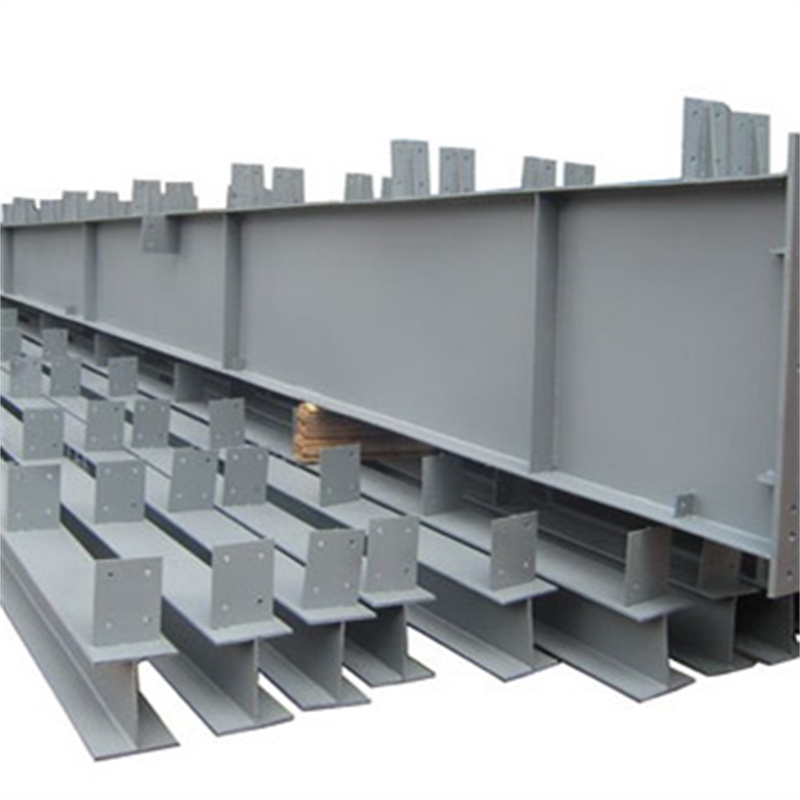
H-section steel beams & columns, galvanized C/Z purlins, inter-column bracings, roof horizontal bracings, wind-resisting columns |
(1) Foundation Embedment Accessories (Factory Foundation Anchoring)
Anchor Bolts (Anchor Bolt Assemblies): Embedded into concrete foundations with base plates, nuts, and washers to secure the bottom of steel columns, transferring the entire factory's vertical pressure and wind loads—core accessories for factory foundations.
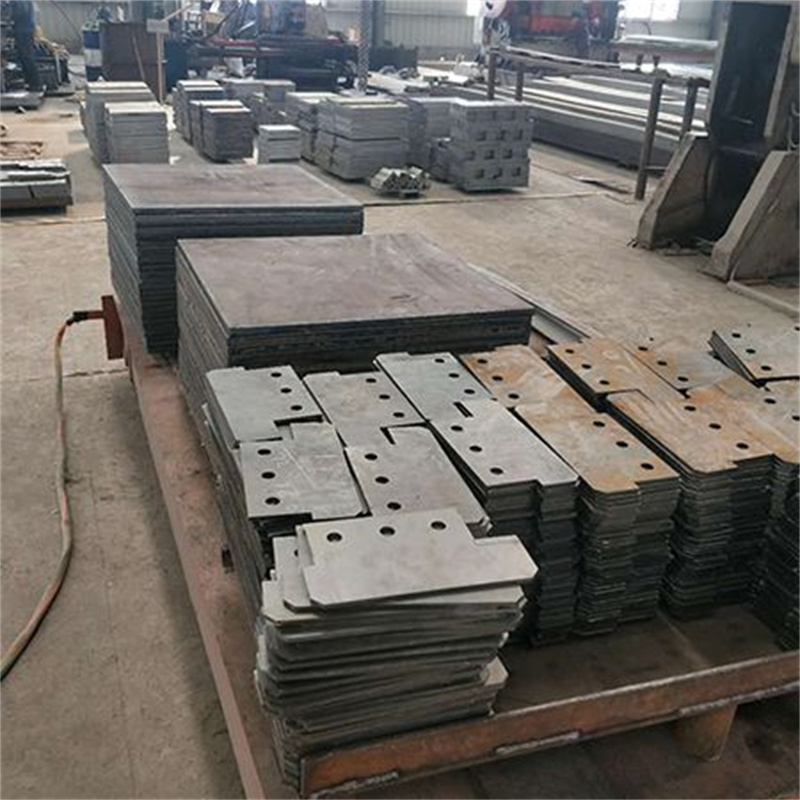
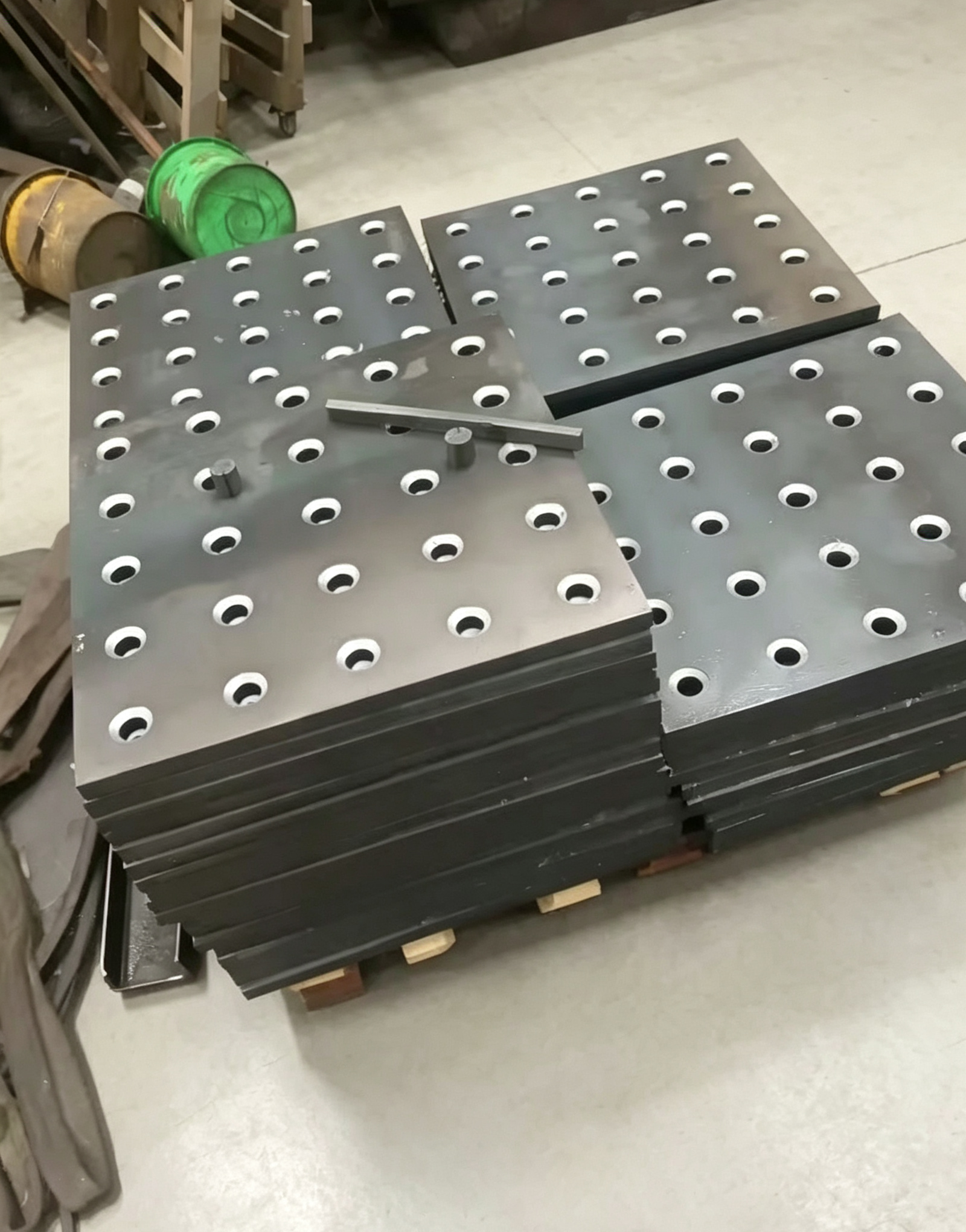
Embedded Steel Plates and Shear Studs: Embedded in equipment foundations, mezzanine floors, and steel-concrete composite floors to enhance the bonding strength between concrete and steel structures.
(2) Main Frame Connection Fasteners (Primary Load-Bearing Beam-Column Nodes)
10.9-Grade Shear-Type/Large Hexagon High-Strength Bolts: For steel column-to-beam splices, main frame connections, and crane beam fixing, bearing heavy-load shear and tension forces—core fasteners for factory structural safety.
Ordinary Galvanized Bolts and Gusset Plates: For splicing of bracing, tie members, wind-resistant columns, and other secondary components—easy to assemble/disassemble, corrosion-resistant.
(3) Secondary Structure Stabilization (Dedicated for C/Z Purlins)
Purlin Brackets: Welded to the side of steel beams to support and fix C/Z purlins, evenly distributing roof and wall loads.
Round Steel Tie Rods and Sleeve Struts: Lateral ties between purlins to prevent purlin twisting and lateral instability under compression—available as straight and diagonal tie rods.
Knee Braces: Connecting the lower flange of roof beams to purlins to constrain lateral deformation of steel beams—essential reinforcement for large-span roofs.
Turnbuckles (Adjustable Threaded Rods): For tension adjustment of tie rods to accommodate construction dimensional tolerances, ensuring the secondary structure remains straight and stable.
(4) Bracing System Reinforcement Components
Column Bracing and Roof Horizontal Bracing Gusset Plates: Connection nodes for angle steel bracing and steel tube tie members, forming an overall stable truss system to resist high winds and seismic lateral forces.
Tie Members and Sleeves: Longitudinally connecting steel columns and beams to maintain longitudinal spacing and prevent overall lateral displacement.
(5) Applicable Building Scenarios
Q1: How to distinguish between high-strength bolts and ordinary galvanized bolts, and when to use each?
A1: 10.9-grade high-strength bolts are applied for primary load-bearing nodes such as steel columns, steel beams, and crane beams, which undertake large shear and tension forces. Ordinary galvanized bolts are only suitable for secondary load-bearing positions including purlins, bracings and guardrails. The two types of bolts are not interchangeable.
Q2: Which anti-corrosion process is suitable for accessories in coastal plants prone to rust?
A2: Integral hot-dip galvanized accessories are the preferred choice. For coastal areas with severe salt fog and chemical workshops, DACROMET coating is recommended for upgrading. It features stronger zinc layer adhesion and excellent resistance to chloride corrosion, greatly extending the service life of structural accessories.
Q3: How to confirm the length and specifications of anchor bolts?
A3: The specifications are calculated according to the factory height, steel column load and concrete foundation thickness. Heavy-load crane workshops require anchor bolts with larger diameters and thickened anchor plates. We can provide professional load calculation verification to match the most suitable anchor bolt specifications.
Q4: Can tie rods and knee braces be omitted during construction?
A4: Omission is not recommended. For large-span roofs and high-wind areas, missing tie rods and knee braces will cause torsion and deformation of purlins and steel beams, resulting in wavy roof surfaces, seriously endangering structural safety and damaging the overall waterproofing performance.
Q5: Can structural accessories be cut or welded on site?
A5: On-site cutting of bolts and tie rods will damage threads and anti-corrosion layers, causing premature rusting and functional failure. On-site welding of gusset plates requires secondary anti-corrosion paint treatment. Factory integral prefabrication is strongly recommended


 EN